0-9 . A . B . C . D . E . F . G . H . I . J . K . L . M . N . O . P . Q . R . S . T . U . V . W . X . Y . Z . А-Я . 中文


Giant Pandas / 大熊猫


Chinese


大熊猫是中国最著名的动物之一。它们生活在中国的四川、陕西和甘肃等地的山区森林里。
大熊猫最特别的地方是它们黑白相间的皮毛——身体是白色的,四肢、耳朵和眼睛周围是黑色的。这让它们看起来非常可爱。
大熊猫喜欢吃竹子。它们每天要吃很多竹子,大约12到38公斤。因为竹子营养不多,所以它们需要吃很多,而且吃完后常常休息和睡觉。
大熊猫独居生活,不喜欢和其他大熊猫一起住。它们有自己固定的生活区域,会用气味做标记。
大熊猫是中国的国宝,也是世界自然保护联盟认定的“易危”物种。中国政府和许多保护组织正在努力保护大熊猫和它们的栖息地。
现在,野生大熊猫的数量正在慢慢增加,这是一个非常好的消息!


Spoken by ???


English

Giant pandas are one of China's most famous animals. They live in mountain forests in Sichuan, Shaanxi, and Gansu provinces.
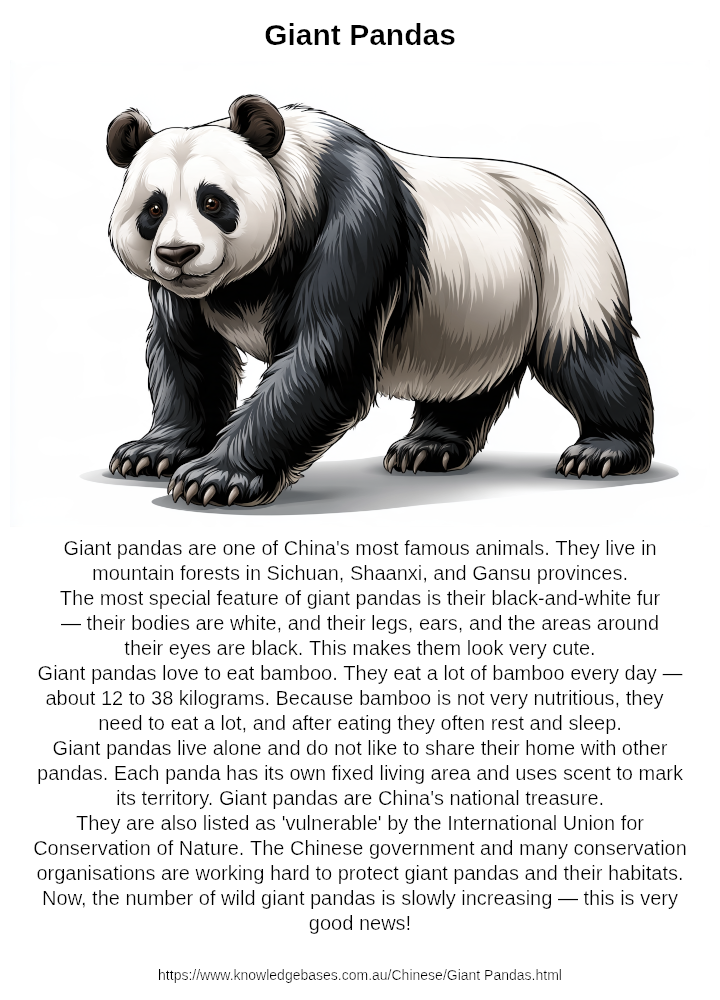
The most special feature of giant pandas is their black-and-white fur — their bodies are white, and their legs, ears, and the areas around their eyes are black. This makes them look very cute.
Giant pandas love to eat bamboo. They eat a lot of bamboo every day — about 12 to 38 kilograms. Because bamboo is not very nutritious, they need to eat a lot, and after eating they often rest and sleep.
Giant pandas live alone and do not like to share their home with other pandas. Each panda has its own fixed living area and uses scent to mark its territory.
Giant pandas are China's national treasure. They are also listed as "vulnerable" by the International Union for Conservation of Nature (IUCN). The Chinese government and many conservation organisations are working hard to protect giant pandas and their habitats.
Now, the number of wild giant pandas is slowly increasing — this is very good news!


Spoken by Wayne Eddy


Chinese / Pinyin

大熊猫是中国最著名的动物之一。它们生活在中国的四川、陕西和甘肃等地的山区森林里。
Dà xióngmāo shì zhōngguó zuì zhùmíng de dòngwù zhī yī. Tāmen shēnghuó zài zhōngguó de sìchuān, shǎnxī hé gānsù děng dì de shānqū sēnlín lǐ.
大熊猫最特别的地方是它们黑白相间的皮毛——身体是白色的,四肢、耳朵和眼睛周围是黑色的。这让它们看起来非常可爱。
Dà xióngmāo zuì tèbié dì dìfāng shì tāmen hēibái xiàng jiān de pímáo——shēntǐ shì báisè de, sìzhī, ěrduǒ hé yǎnjīng zhōuwéi shì hēisè de.
大熊猫喜欢吃竹子。它们每天要吃很多竹子,大约12到38公斤。因为竹子营养不多,所以它们需要吃很多,而且吃完后常常休息和睡觉。
Zhè ràng tāmen kàn qǐlái fēicháng kě'ài. Dà xióngmāo xǐhuān chī zhúzǐ. Tāmen měitiān yào chī hěnduō zhúzǐ, dàyuē 12 dào 38 gōngjīn.
大熊猫独居生活,不喜欢和其他大熊猫一起住。它们有自己固定的生活区域,会用气味做标记。
Yīnwèi zhúzǐ yíngyǎng bù duō, suǒyǐ tāmen xūyào chī hěnduō, érqiě chī wán hòu chángcháng xiūxí hé shuìjiào. Dà xióngmāo dújū shēnghuó, bù xǐhuān hé qítā dà xióngmāo yīqǐ zhù.
大熊猫是中国的国宝,也是世界自然保护联盟认定的“易危”物种。中国政府和许多保护组织正在努力保护大熊猫和它们的栖息地。
Tāmen yǒu zìjǐ gùdìng de shēnghuó qūyù, huì yòng qìwèi zuò biāojì. Dà xióngmāo shì zhōngguó de guóbǎo, yěshì shìjiè zìrán bǎohù liánméng rèndìng de “yì wēi” wùzhǒng.
现在,野生大熊猫的数量正在慢慢增加,这是一个非常好的消息!
Zhōngguó zhèngfǔ hé xǔduō bǎohù zǔzhī zhèngzài nǔlì bǎohù dà xióngmāo hé tāmen de qīxī dì. Xiànzài, yěshēng dà xióngmāo de shùliàng zhèngzài màn man zēngjiā, zhè shì yīgè fēicháng hǎo de xiāoxī!


Vocabulary

  • (dàxióngmāo) → giant panda
  • (zhùmíng) → famous / well-known
  • (dòngwù) → animal
  • (shēnghuó) → live / life
  • (sēnlín) → forest
  • (shānqū) → mountain area
  • (tèbié) → special / especially
  • (hēibái xiāngjiān) → black and white alternating / black-and-white
  • (pímáo) → fur / coat (of animal)
  • (shēntǐ) → body
  • (sìzhī) → limbs (arms and legs)
  • (ěrduo) → ears
  • (yǎnjīng) → eyes
  • (kě'ài) → cute / lovely
  • (zhúzi) → bamboo
  • (gōngjīn) → kilogram
  • (yíngyǎng) → nutrition / nutrients
  • (xiūxi) → rest
  • (shuìjiào) → sleep
  • (dújū) → live alone / solitary
  • (gùdìng) → fixed / established
  • (qūyù) → area / region
  • (qìwèi) → scent / smell
  • (biāojì) → mark / label
  • (guóbǎo) → national treasure
  • (shìjiè zìrán bǎohù liánméng) → International Union for Conservation of Nature (IUCN)
  • (yìwēi) → vulnerable (species)
  • (wùzhǒng) → species
  • (zhèngfǔ) → government
  • (bǎohù) → protect / protection
  • (zǔzhī) → organization
  • (qīxīdì) → habitat
  • (yěshēng) → wild
  • (shùliàng) → number / quantity
  • (zēngjiā) → increase / grow


Related Pages